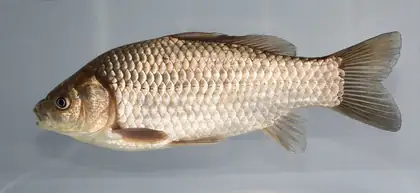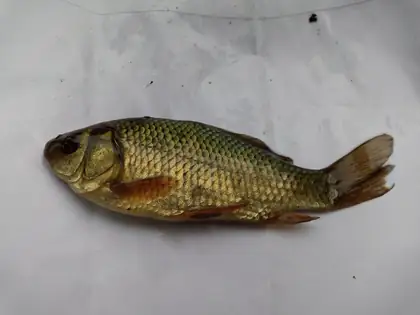
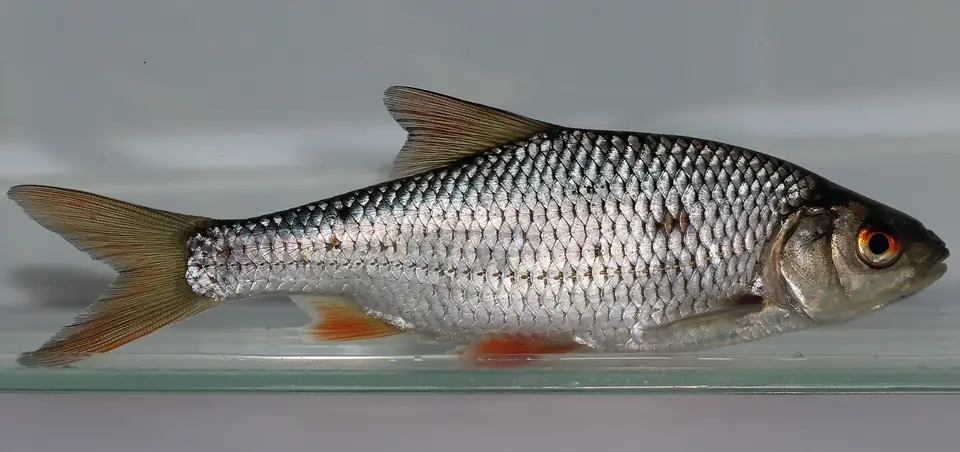
Description
Very common species, in still and flowing waters.
How to identify it
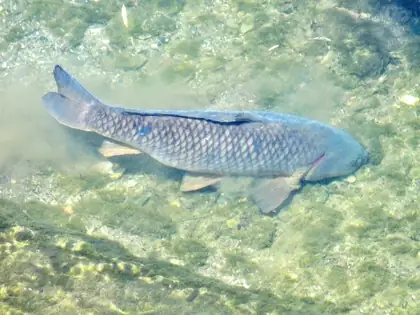
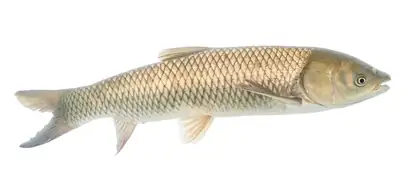
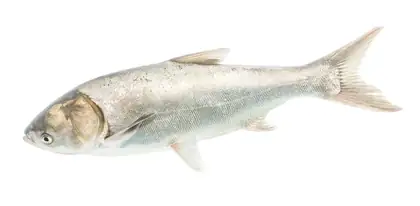
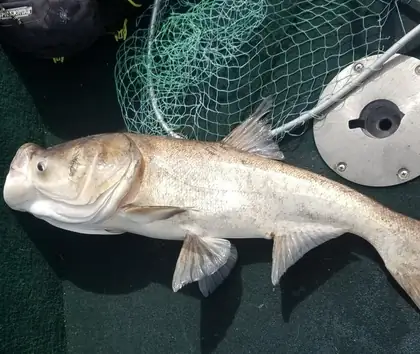
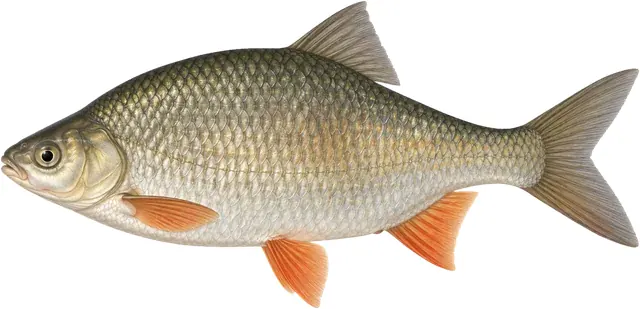
Red iris, red pelvic and anal fins, silvery flanks.
Appearance
Silvery body with a dark blue-green back and a white belly; young fish are slim, adults become deeper and broader. The mouth is terminal, almost horizontal. The rudd, with which it is often confused, has more golden tones, an upturned mouth, an eye without a red spot and a dorsal fin set further back: in the roach the dorsal fin starts roughly above the pelvic fins. The dace has a greener body and a colourless eye, the id smaller scales and a bigger head. In turbid water the colours of the eye and fins may fade.
Habitat and habits
It is among the most adaptable fish in Europe: it is found in ponds, lakes, gravel pits, reservoirs, canals and rivers of every size, and tolerates polluted and even brackish water. It lives in shoals, usually made up of fish of similar age; the larger ones stay in deeper water, the small ones under the bank. It likes areas with reeds and submerged plants, which offer cover and food. In warm weather it feeds near the surface, in the cold it drops deep and gathers in dense shoals. It spawns between March and June.
Related species and forms
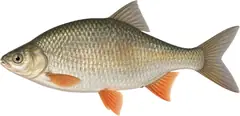
Pigo
Rutilus pigus
Cyprinid endemic to northern Italy, typical of the large sub-Alpine lakes and the slow stretches of the major rivers.
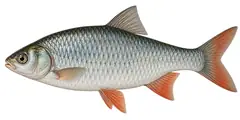
Cactus roach
Rutilus virgo
Cyprinid of the Danube and its large tributaries, Frauennerfling in German.
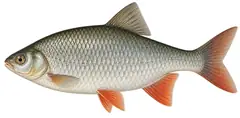
Pearlfish
Rutilus meidingeri
Cyprinid endemic to the pre-Alpine lakes and the upper Danube, Perlfisch in German.


There's more in the app
This species' bite index, recommended baits and methods, and the rules of the day for every water. Offline too.
Out on Android and iPhone