Description
A river fish of flowing water; feeds on algae on the bottom.
How to identify it
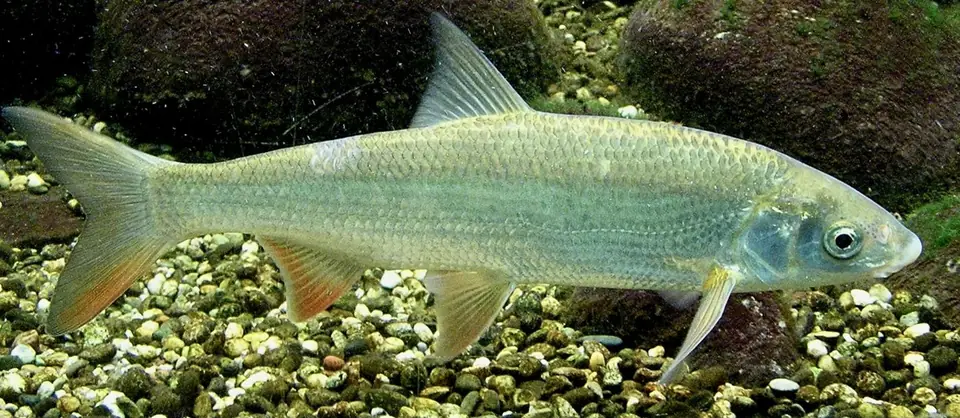
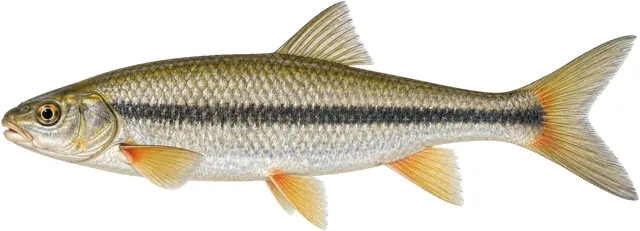
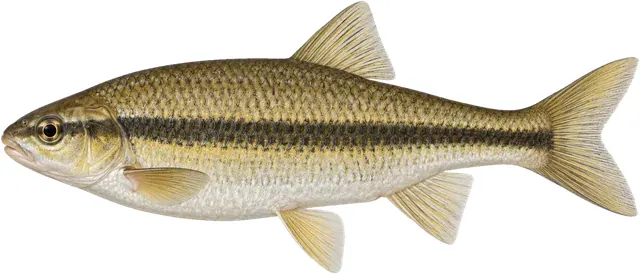
Projecting snout, small straight mouth with a horny lower lip, pelvic and anal fins orange-red.
Appearance
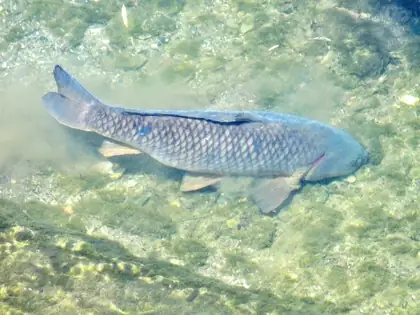
Slender, almost spindle-shaped body covered in blue-grey scales with a metallic sheen; the belly is pale and the tail tends towards orange. The most distinctive feature is the head: a rounded snout that overhangs a horizontal, low-set mouth with a hard, sharp lower lip, ideal for scraping stones. Seen from below, the mouth slit is almost straight, unlike the horseshoe-shaped mouth of the barbel, which also has four barbels. Usually 25-40 cm long.
Habitat and habits
A river fish that lives in large shoals, often of fish of the same size. It looks for deep water with a strong current and a bed of stones or gravel: bridge piers, rock revetments, boulders and undercut banks. It stays close to the bottom, where it scrapes the algal film off the stones and takes aquatic plants and small invertebrates. It is active by day and makes seasonal movements along the river. It needs good water quality and clean beds to spawn.
Related species and forms
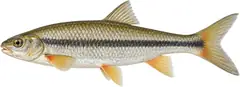
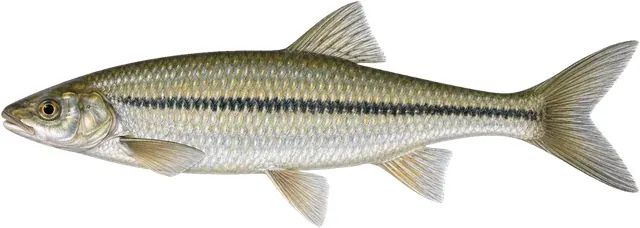
South European nase
Protochondrostoma genei
Cyprinid of the rivers of northern Italy and western Slovenia; the only species of the genus Protochondrostoma, described by Bonaparte in 1839 and dedicated to Giuseppe Gené.
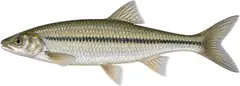
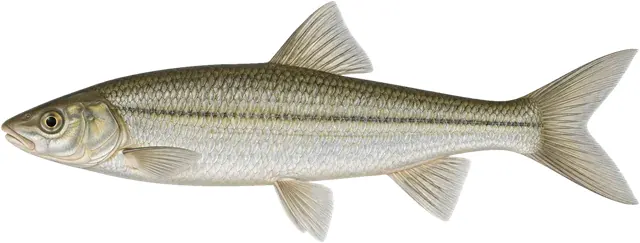
Iberian nase
Pseudochondrostoma polylepis
Nase endemic to the Iberian Peninsula, described by Steindachner in 1864; it lives in the Atlantic rivers from the Tagus to the Sado and feeds on algae scraped from the bottom.
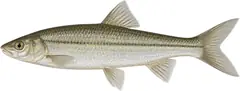
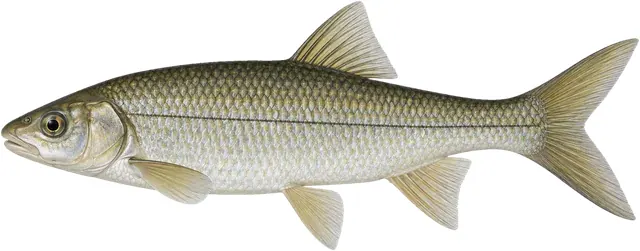
Douro nase
Pseudochondrostoma duriense
Nase endemic to the north-west of the Iberian Peninsula, described by Coelho in 1985, which scrapes algae off submerged surfaces.
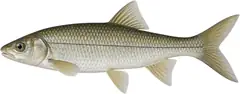
Guadiana nase
Pseudochondrostoma willkommii
Cyprinid endemic to the southern Iberian Peninsula, related to our Italian nases and river nases.
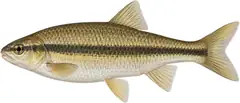
Iberian arched-mouth nase
Iberochondrostoma lemmingii
Small cyprinid endemic to the Iberian Peninsula ('pardilla' in Spanish, 'ruivaca' in Portuguese), once included in the genus Chondrostoma.
There's more in the app
This species' bite index, recommended baits and methods, and the rules of the day for every water. Offline too.
Out on Android and iPhone