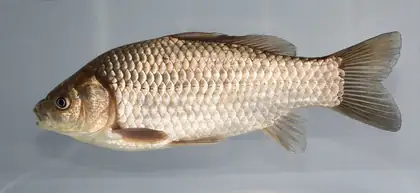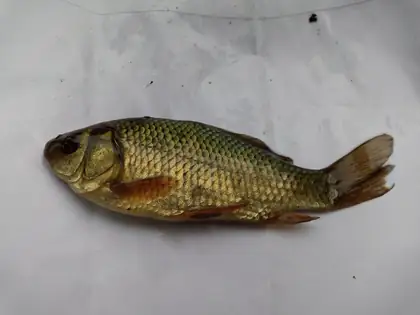
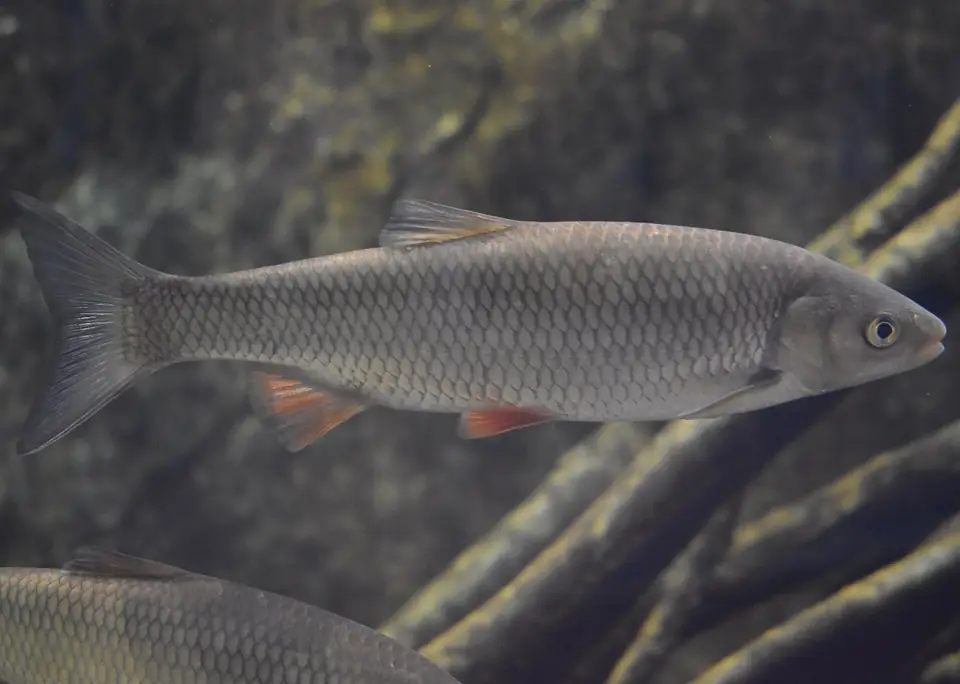
Description
Very common in rivers and lakes; eats almost anything.
How to identify it
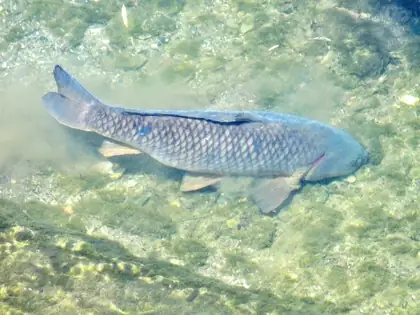
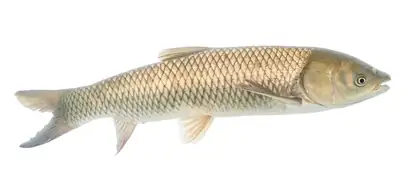
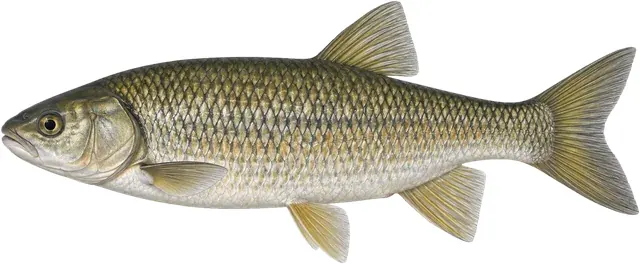
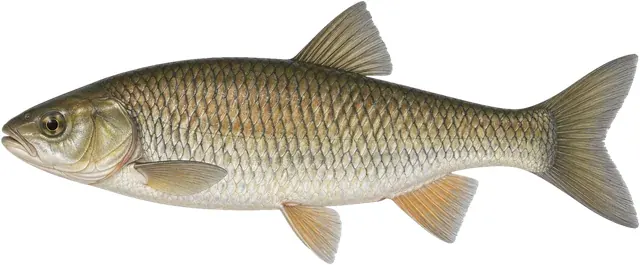
Sturdy body, large head, wide mouth, convex anal fin, pelvic and anal fins red-orange.
Appearance
A sturdy, elongated, almost cylindrical fish, with a wide, rounded head. The scales are large, green-brown on the back and golden on the flanks, with a thin dark edge that draws a clearly visible net pattern; the belly is pale. The tail is dark brown, almost black, the dorsal fin grey-green and the other fins orange-red. Compared with the id it has a bigger head and a less deep body; compared with the dace it is much bigger, with a wider mouth and an anal fin with a rounded edge.
Habitat and habits
It lives in almost every type of water: streams, small and large rivers, canals and lakes, but is most abundant in medium-sized watercourses where riffles and pools alternate. Adults often sit alone under the bank, among roots and branches that brush the water; the young form shoals in shallow water along the banks. It dislikes bright light and moves more at dawn and dusk. It eats anything, from insects fallen into the water to small fish, and feeds all year round, even on the coldest days.
Related species and forms
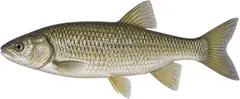
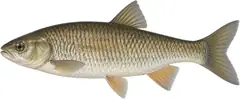
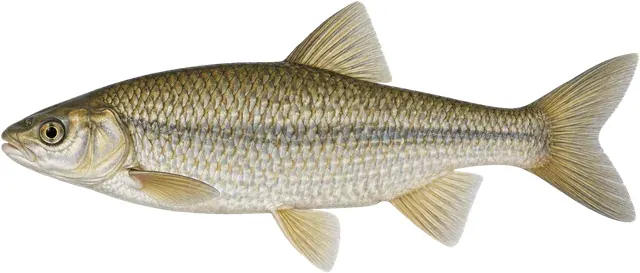
Northern Iberian chub
Squalius carolitertii
Chub endemic to the north-west of the Iberian Peninsula, known locally as 'bordallo', 'escalo' or 'gallego'.
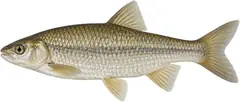
Southern Iberian chub
Squalius pyrenaicus
Chub endemic to the Tagus basin in Spain and Portugal; it is one of the parental species of the calandino (Squalius alburnoides).
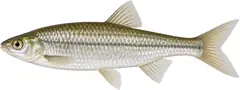
Valencia chub
Squalius valentinus
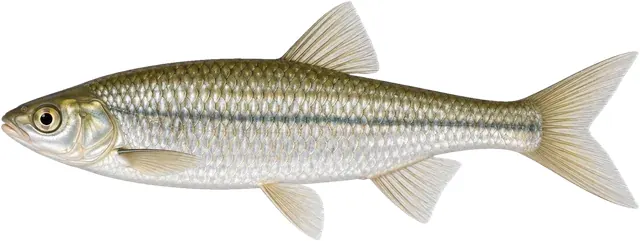
Small chub of the Spanish Mediterranean coast, also called the eastern Iberian chub.
Calandino
Squalius alburnoides
Small Iberian cyprinid of hybrid origin, with a unique reproductive system: polyploid lineages exist and reproduction takes place by hybridogenesis or androgenesis.
There's more in the app
This species' bite index, recommended baits and methods, and the rules of the day for every water. Offline too.
Out on Android and iPhone